Jimmy Connors Net Worth 2026 - The Belleville Brawler's Enduring Financial Legacy
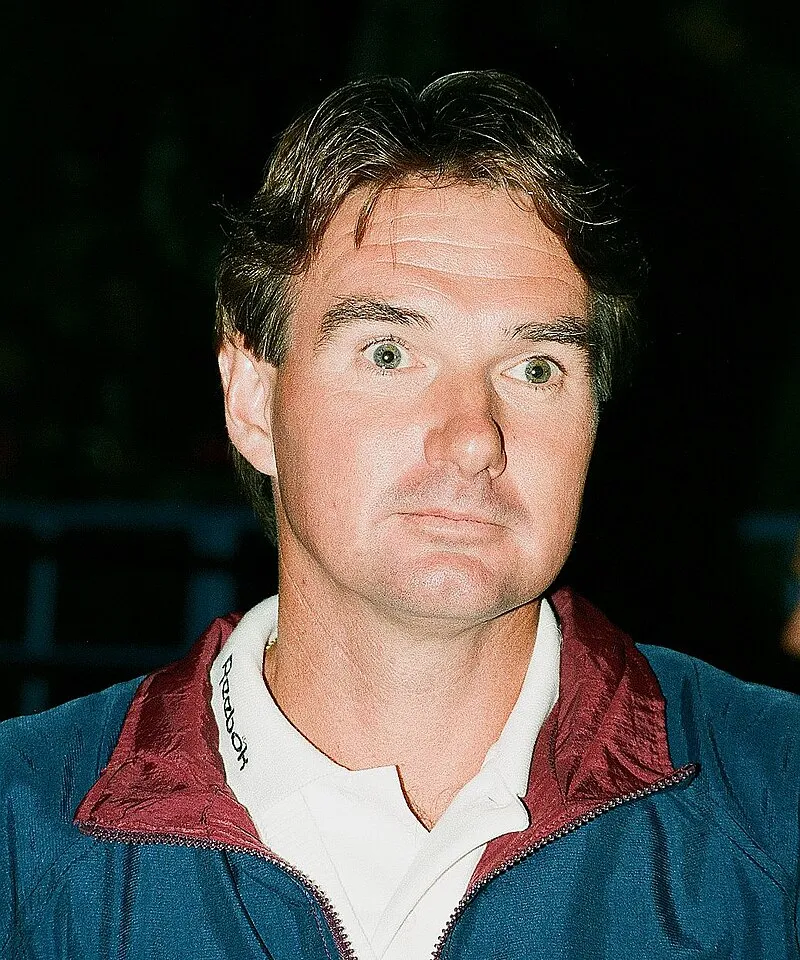
Photo of Jimmy Connors, via Wikimedia Commons
Jimmy Connors Net Worth 2026 - The Brash American Champion's Lasting Financial Empire
Jimmy Connors never played the game quietly, and he has not managed his finances quietly either. The Illinois-born champion who terrorized opponents from the baseline for nearly three decades has translated eight Grand Slam titles, a record 109 ATP singles titles, and an inimitable competitive personality into an estimated net worth of approximately $30 million as of 2026. That figure reflects not just what Connors earned on the court, but how effectively he has monetized his legend in the decades since.
 Photo: Jimmy Connors, via image-cdn.essentiallysports.com
The Record Books and the Prize Money They Generated
Connors dominated professional tennis through the 1970s and deep into the 1980s with a ferocity that made him simultaneously the sport's most compelling figure and its most polarizing personality. His eight Grand Slam singles titles — five at the US Open, two at Wimbledon, and one at the Australian Open — were accompanied by prize money earnings that, while substantial for the era, pale in comparison to what those titles would generate today.
 Photo: US Open, via sportsmeridian.com
Over a career that stretched from the early 1970s to his remarkable 1991 US Open run at age 39, Connors accumulated total prize money estimated at approximately $8.6 million, a figure that ranked him among the sport's all-time leaders at the time of his retirement. Adjusted for inflation and measured against the purchasing power of those dollars in the current economy, his on-court earnings represent a considerably more significant sum.
Endorsements during his peak years added substantially to his income. Equipment deals, apparel contracts, and commercial appearances made Connors one of the highest-earning athletes in American sports during the late 1970s and early 1980s. His combative, unapologetic persona — so frequently at odds with tennis's genteel traditions — paradoxically made him enormously appealing to American audiences and, by extension, to brands seeking that authentic, unfiltered energy.
Coaching and the Roddick Chapter
Connors' most high-profile post-retirement professional chapter arrived in 2006 when he took over as coach of Andy Roddick, the last American man to hold a Grand Slam singles title. The partnership, though brief, was commercially significant. Roddick's run to the 2006 US Open final under Connors' direction generated considerable media attention and reinforced Connors' standing as a legitimate tactical voice in the modern game.
 Photo: Andy Roddick, via resize-parismatch.lanmedia.fr
Coaching arrangements at that level of prestige carry compensation packages that typically include base fees, performance bonuses, and travel stipends. Industry estimates suggest top-tier player-coach partnerships of that nature can generate $500,000 or more annually for the coach, particularly when the player in question is a major commercial draw. Connors' tenure with Roddick, while ultimately limited in duration, demonstrated that his competitive knowledge retained real market value.
Beyond Roddick, Connors has engaged in various advisory and clinic capacities throughout the years, commanding appearance fees and consulting arrangements that reflect his historical stature in American tennis.
The Memoir and the Media Presence
In 2013, Connors published his autobiography, The Outsider, a characteristically blunt and unflinching account of his career, rivalries, and personal life. The book was well-received and performed creditably in the marketplace, generating royalty income that has continued to accumulate through ongoing sales and digital distribution. For a memoir from a genuine sports legend with a story as compelling as Connors', long-tail royalty income can be meaningful over many years.
Connors has also maintained a periodic media presence through television commentary, interview appearances, and digital content platforms. His willingness to speak candidly about the modern game — frequently in terms that generate controversy and, therefore, attention — has kept him relevant in sports media cycles well beyond what many retired champions achieve. That visibility, in turn, supports his ability to command appearance fees and speaking engagements.
Exhibition Tennis and the Senior Circuit
Throughout the 1990s and into the 2000s, Connors was a fixture on the Champions Tour and various senior exhibition circuits. These events, which drew substantial audiences eager to see legends of the game compete in a more relaxed format, provided a meaningful income stream during the transitional years of his retirement. Exhibition match fees for a player of Connors' profile and entertainment value were consistently among the highest on the senior circuit.
Even as his playing days on those circuits wound down, Connors' reputation as a compelling presence — someone who could fill a venue and generate television ratings — has continued to support his commercial value at corporate events and private exhibitions.
Real Estate and Long-Term Wealth Preservation
Connors has been a resident of Santa Barbara, California, for many years, a market that has appreciated dramatically over the decades. Real estate holdings in that region contribute meaningfully to his overall net worth, and his long tenure in one of America's most desirable property markets has been financially advantageous.
Beyond real estate, Connors has made investments consistent with those of a high-net-worth individual who came of age financially during the late 1970s and 1980s — a period when American athletes of his caliber were first beginning to benefit from sophisticated financial planning and diversified investment strategies.
The Connors Brand at 73
At 73 years old in 2026, Jimmy Connors remains one of American tennis's most recognizable and commercially viable legends. His estimated $30 million net worth is the product of a career that was never simply about tennis — it was about personality, about confrontation, and about the kind of authentic competitive spirit that audiences and brands find endlessly compelling.
In a sport that increasingly rewards polish and global appeal, Connors' rough-edged, take-no-prisoners legacy stands as a reminder that financial longevity in athletics does not require universal affection. Sometimes, it only requires being utterly, unmistakably unforgettable.