Rod Laver Net Worth 2026 - The Australian Legend's Decades-Long Financial Dynasty
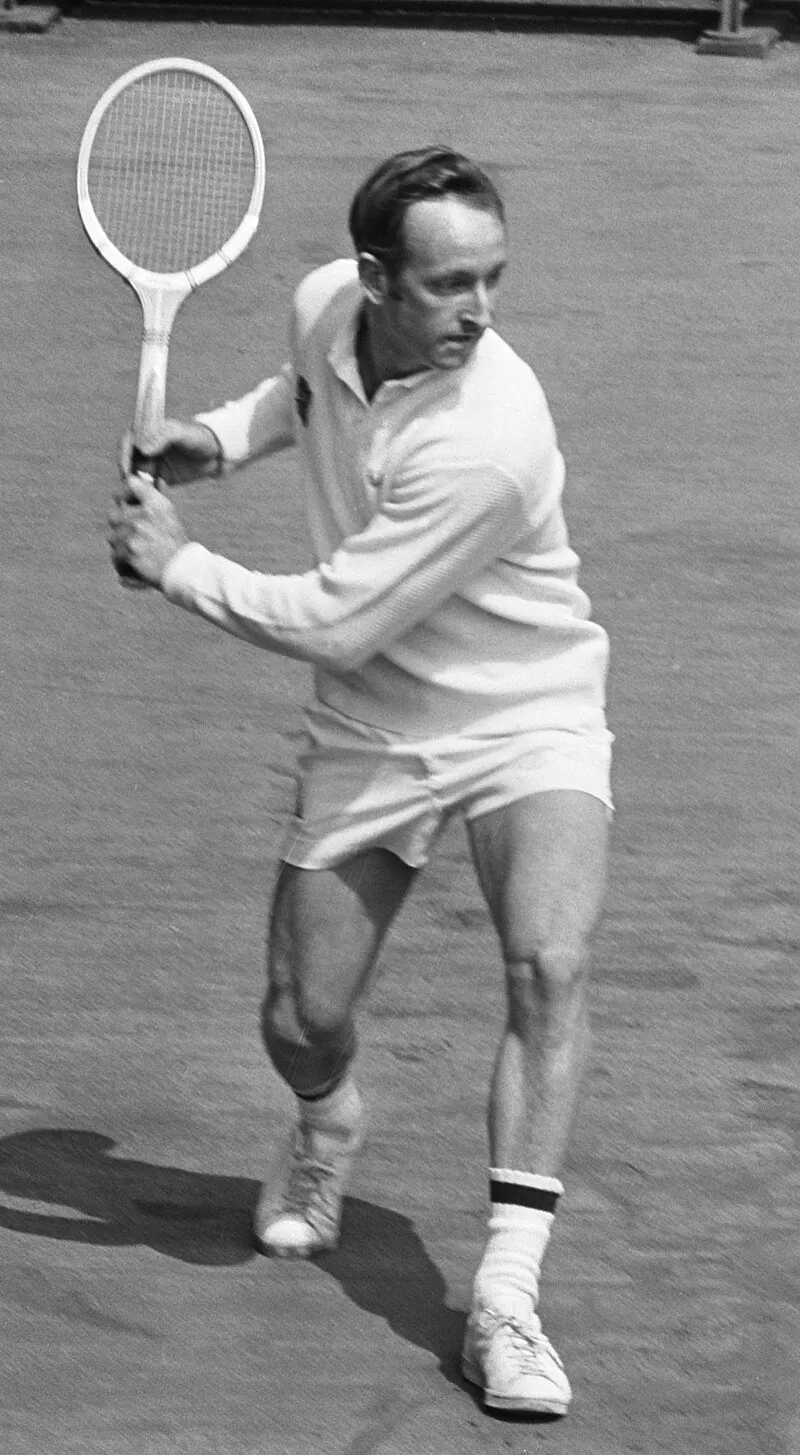
Photo of Rod Laver, via Wikimedia Commons
In the modern era of professional tennis, where top players routinely pocket eight-figure sums in a single calendar year, it can be easy to forget that the sport's greatest achiever once competed for prize money measured in the hundreds of dollars. Rod Laver, the Queensland-born left-hander who stands alone as the only player to win all four Grand Slam titles in a single year — twice — built his financial legacy not through astronomical prize checks but through the compound interest of an irreplaceable sporting reputation.
As of 2026, Rod Laver's estimated net worth is placed at approximately $30 million, a figure that reflects decades of careful asset accumulation, shrewd licensing arrangements, and an enduring commercial appeal that has outlasted virtually every rival from his era.
A Career Defined by Unmatched Achievement
Laver turned professional in 1963, a decision that effectively barred him from Grand Slam competition until the Open Era began in 1968. During those five lost years, he competed on the professional circuit for appearance-based fees rather than structured prize money. When the Open Era arrived, Laver seized his moment with extraordinary authority, claiming the 1968 and 1969 Australian Open, French Open, Wimbledon, and U.S. Open titles — the second Calendar Grand Slam completed in an era when competition had never been more intense.
His career prize money, by today's standards, appears almost symbolic. Estimates place his total on-court earnings across his professional career at roughly $1.5 million — a figure that a top-ten player today might surpass in a single tournament run. Yet Laver's financial story is not about prize money. It is about what a singular legacy can generate over half a century.
The Endorsement Era and Early Commercial Deals
Even in the 1960s and 1970s, Laver's name carried weight with equipment manufacturers. He maintained a long-standing relationship with Dunlop, whose rackets he used throughout much of his competitive career. Licensing arrangements for his name and likeness with sporting goods companies provided a steady income stream that continued well into his post-retirement years.
The construction of the Rod Laver Arena in Melbourne — the centerpiece of the Australian Open — in 1988 and its naming in his honor in 2000 gave Laver's commercial profile a permanent, globally televised platform. Every January, when the Australian Open broadcasts to hundreds of millions of households worldwide, Laver's name appears in the tournament's visual identity thousands of times. That kind of organic brand reinforcement is worth considerably more than any conventional endorsement contract.
Appearance Fees and the Senior Circuit
Following his retirement from full-time competition, Laver remained an active presence on the senior and exhibition circuit throughout the 1980s and 1990s. Senior tour events, corporate hospitality appearances, and charity exhibitions commanded fees that, while not publicly disclosed, are understood within the industry to have ranged from $50,000 to $150,000 per engagement for a player of Laver's stature during peak demand periods.
His participation in the Laver Cup — the team competition co-founded by Roger Federer and his management group and named expressly in Laver's honor — has provided a renewed commercial association with one of the sport's most prestigious modern events. Laver's connection to the tournament, while primarily ceremonial and ambassadorial, carries financial implications through licensing of his name and image across the event's global broadcast and sponsorship infrastructure.
Real Estate and Long-Term Asset Holdings
Laver has maintained a relatively private financial profile compared to many of his contemporaries. He has resided primarily in the United States for much of his post-retirement life, having settled in California following his competitive years on the American professional circuit. Real estate holdings in California and Australia are understood to form a meaningful component of his overall net worth.
Property values in the areas where Laver has historically maintained residences have appreciated substantially over the decades, contributing to passive wealth accumulation that requires no active management. For athletes of Laver's generation who acquired real estate during the 1970s and 1980s, those holdings have frequently proven to be among the most valuable components of their financial portfolios.
Legacy Licensing and Biographical Revenue
The commercial licensing of Laver's name, image, and story has generated consistent revenue across multiple decades. Authorized biographies, documentary features, and retrospective media productions have all contributed licensing fees. His autobiography, The Education of a Tennis Player, co-authored with Bud Collins, has remained in print in various editions and continues to generate royalty income.
In 2019, Laver suffered a stroke, an event that brought renewed global attention to his life and legacy. His public recovery and continued engagement with the tennis community reinforced his standing as one of the sport's most beloved figures, sustaining commercial interest in his story at a time when many athletes of his generation have faded from public consciousness.
The Laver Cup: A Living Monument to His Name
The Laver Cup, launched in 2017 and now broadcast across major sports networks globally, represents perhaps the most significant ongoing financial association of Laver's post-retirement life. While the precise financial terms of his arrangement with the tournament's organizers have not been publicly disclosed, the naming rights and ambassadorial relationship with an event that draws world-number-one players and sells out arenas across Europe and North America represents a form of wealth that extends beyond simple dollar figures.
The tournament's sale of broadcast rights, merchandise, and sponsorship packages — all of which carry Laver's name — generates hundreds of millions of dollars in total commercial activity annually. Even a modest licensing percentage of that activity would represent a meaningful income stream.
Philanthropy and Community Investment
Laver has directed a portion of his wealth toward charitable causes, particularly those connected to youth tennis development in Australia. The Rod Laver Foundation has supported grassroots programs aimed at making tennis accessible to young Australians from rural and regional communities — echoing Laver's own origins in Rockhampton, Queensland.
These philanthropic commitments reflect a financial philosophy that prioritizes legacy alongside accumulation, a pattern consistent with Laver's broader approach to life after professional competition.
The Bottom Line
Rod Laver's estimated $30 million net worth in 2026 is the product of a career that redefined what was possible in tennis, combined with decades of prudent commercial decisions and the extraordinary good fortune of having his name permanently embedded in the sport's infrastructure. In an era when his contemporaries earned a fraction of what modern champions collect in a single major, Laver's ability to convert historical greatness into sustained financial relevance stands as one of the more remarkable wealth-building stories in all of professional sport.